Carbon Capture and Storage
CCS helps mitigate climate change by capturing carbon dioxide (
Global CCS Institute 2 page overview PDF
Carbon emission scope types
Scope 1 | Direct emissions
Direct emissions that are owned or controlled. e.g. burning fuel in a company vehicle.
Scope 2 | Indirect emissions
Indirect emissions that are a consequence of a company’s activities but occur from sources not owned or controlled by it. Scope 2 caused indirectly from where the energy it purchases and uses is produced. e.g. use of electricity purchase from the grid to power a company building.
Scope 3 | Indirect emissions
Indirect emissions that are a consequence of a company’s activities but occur from sources not owned or controlled by it. Scope 3 covers all emissions not covered by scope 1 or 2. e.g. when a company buys, uses and disposes of products from suppliers.
Methods of
Absorption
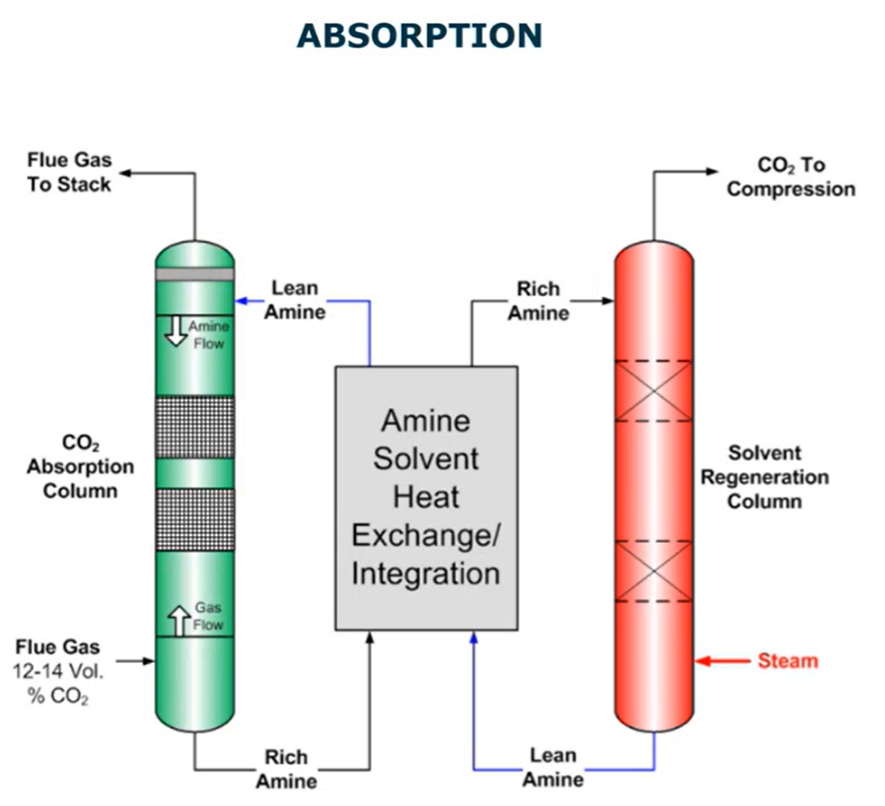
Chemical absorption of
Chemical solvents are an interaction at the molecular level to break bonds and form new bonds. Common amines are MEA1 (Monoethanolamine), DEA2 (Diethanolamine), a-MDEA (Methyldiethanolamine)3.
Physical solvents dissolve a solute through intermolecular interactions and do not chemically react. Common solvents are DEPG (Dimethyl Ether of Polyethylene Glycol), methanol, NMP (N-methyl-2-pyrrolidone) and PC.
Adsorption
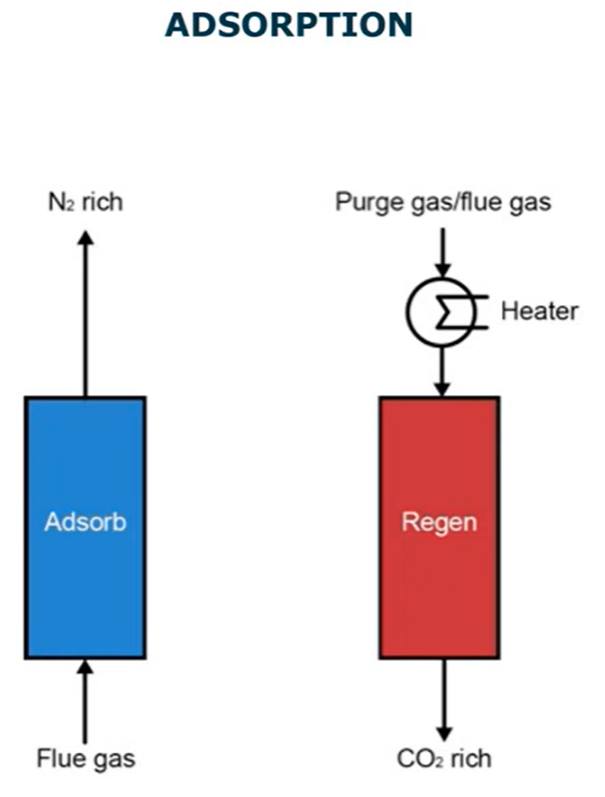
Adsorption of
Cryogenics
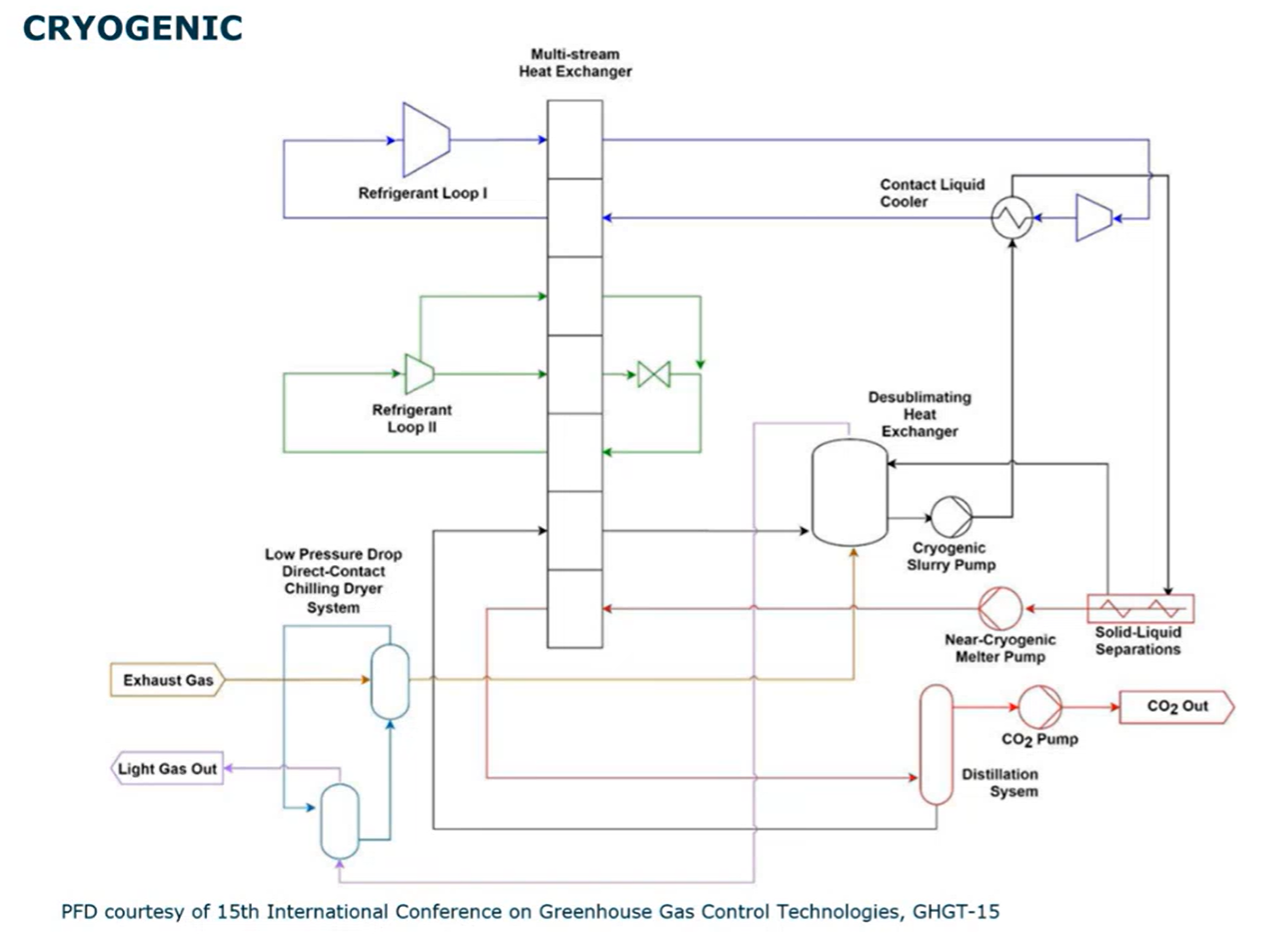
Utilising low temperatures to condense and extract
Pre-cool the
Quite an energy intensive process.
Membranes
Biological
Use of microbes or enzymes to capture
Footnotes
-
MEA is a primary amine. It is the oldest solvent used in modern Gas Sweetening plants. Gas sweetening process using MEA is in the public domain. ↩
-
This amine is a secondary amine. The processing scheme of DEA is similar to MEA processing scheme with the exception of the reclaimer which is not required. ↩
-
MDEA is a tertiary amine. It is a newcomer to the group of ethanolamines used for natural gas sweetening and has received a great deal of attention recently because of its capability for selective reaction with
in the presence of . ↩